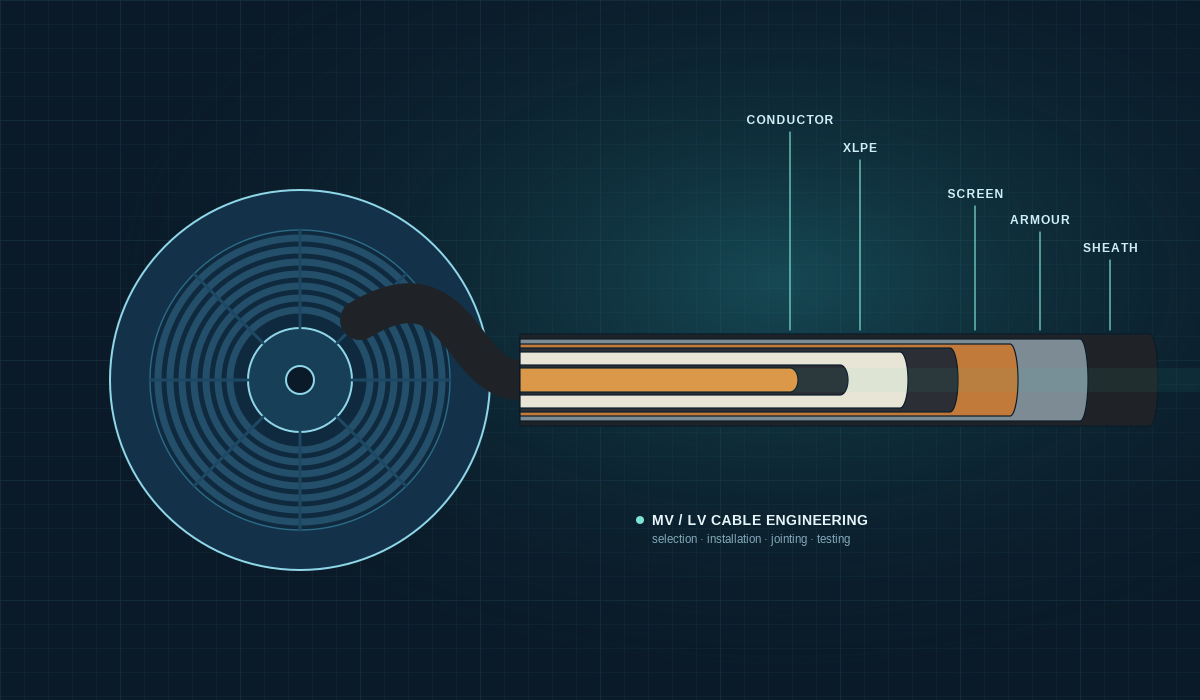
A field-oriented inspection sequence for cable delivery, storage, trench/duct installation, pulling, termination and testing. This guide provides a structured field and engineering review framework. Apply the sequence to the approved scope and record project-specific requirements separately.
01Before delivery
Verify approved material submittal, cable datasheet, drum schedule, voltage grade, conductor size, cores, armour/screen, manufacturer, drum condition and test certificates. Match drum markings to purchase and inspection records.
02Storage and handling
Store drums upright on firm ground, protect cable ends against moisture ingress and follow drum rolling arrows. Use suitable lifting equipment and avoid dropping drums. Check the manufacturer's minimum bending radius and pulling limits.
03Route readiness
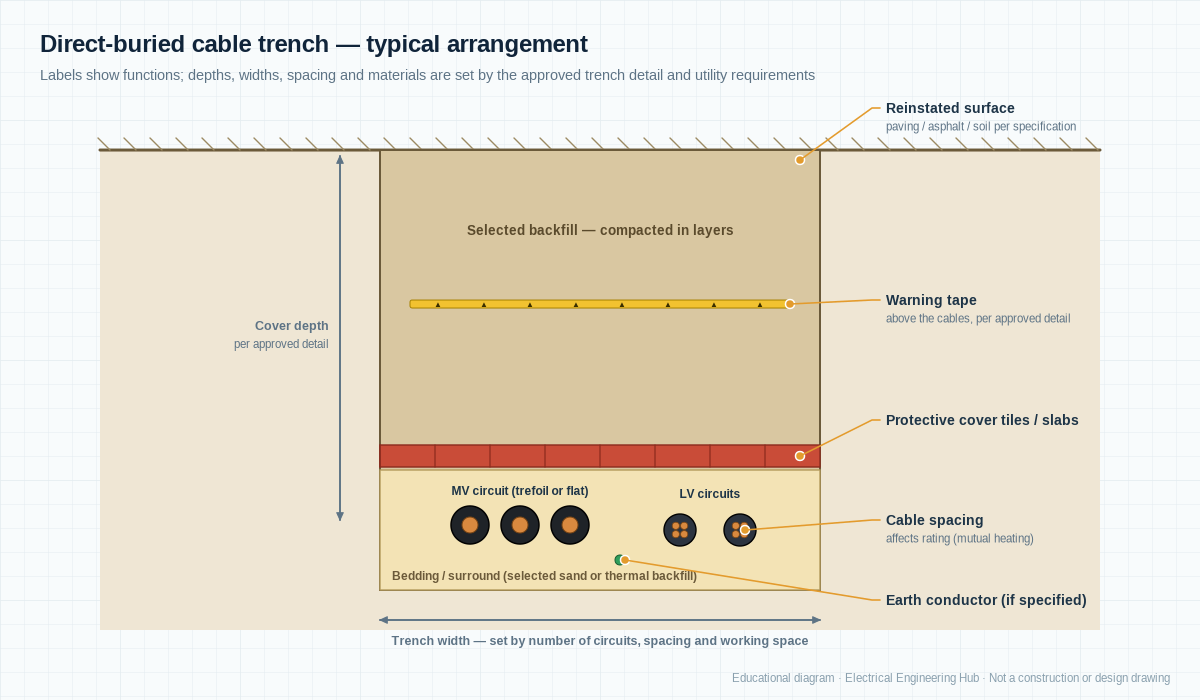
Inspect trench or duct route, bedding, duct cleanliness, draw ropes, manholes, separation from other services, crossing details, warning tape/tiles and route markers. Confirm civil readiness and approved route before pulling.
04Cable pulling
Use an approved pulling method, suitable rollers and pulling equipment. Control pulling tension and sidewall pressure as required by the cable/manufacturer data. Avoid twisting, kinking and dragging cable over sharp edges.
05Termination and records
Verify glands, lugs, stress-control components, screen/armour bonding, phase identification, torque requirements and sealing. Record cable ID, from/to, measured length, test results, drum number and termination references.