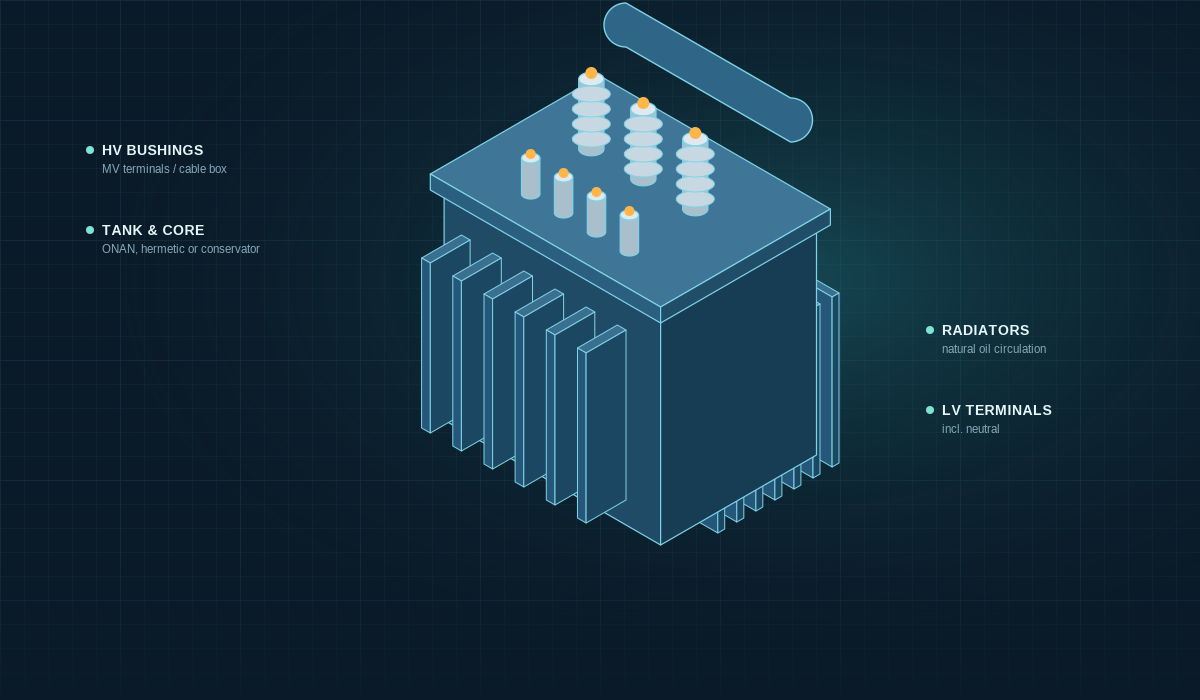
A power transformer transfers AC energy between circuits by electromagnetic induction. For site engineers, the nameplate, approved datasheet and test documentation provide the starting point for confirming that the supplied unit matches the project design.
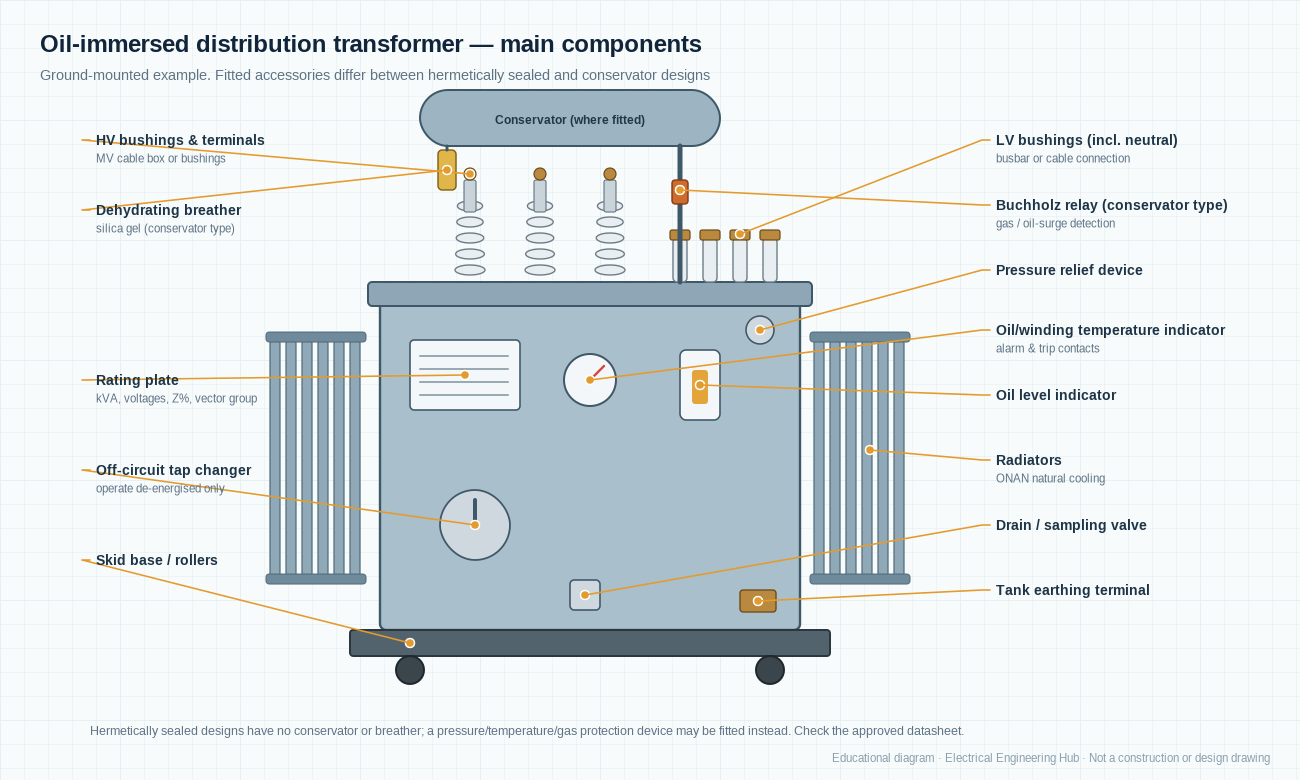
01Key nameplate information
- Rated power in kVA or MVA.
- Primary and secondary rated voltages.
- Rated frequency and number of phases.
- Percentage impedance and vector group.
- Cooling method and insulation/temperature-rise details.
- Tap range and tap-changer arrangement.
- Applicable standard, serial number and manufacturer details.
02Site document checks
- Compare manufacturer, model, rating and voltage ratio against the approved submittal and purchase specification.
- Verify vector group, impedance, tap range and winding connection against the design documents.
- Review routine test reports and any required type or special test evidence.
- Check accessories, protection devices, temperature indicators, earthing points and cable/busbar interfaces.
- Confirm installation, oil handling (if applicable), clearances and pre-commissioning requirements with approved project documents.
03Useful calculations
For a balanced three-phase transformer, apparent power is S = √3 × VLL × IL. This relationship can be used to estimate line current from a known kVA rating and line voltage, but actual operating limits and protection settings must be checked separately.
Important: Do not infer acceptance from the nameplate alone. Confirm the complete approved technical specification, test results, installation conditions and commissioning procedure.