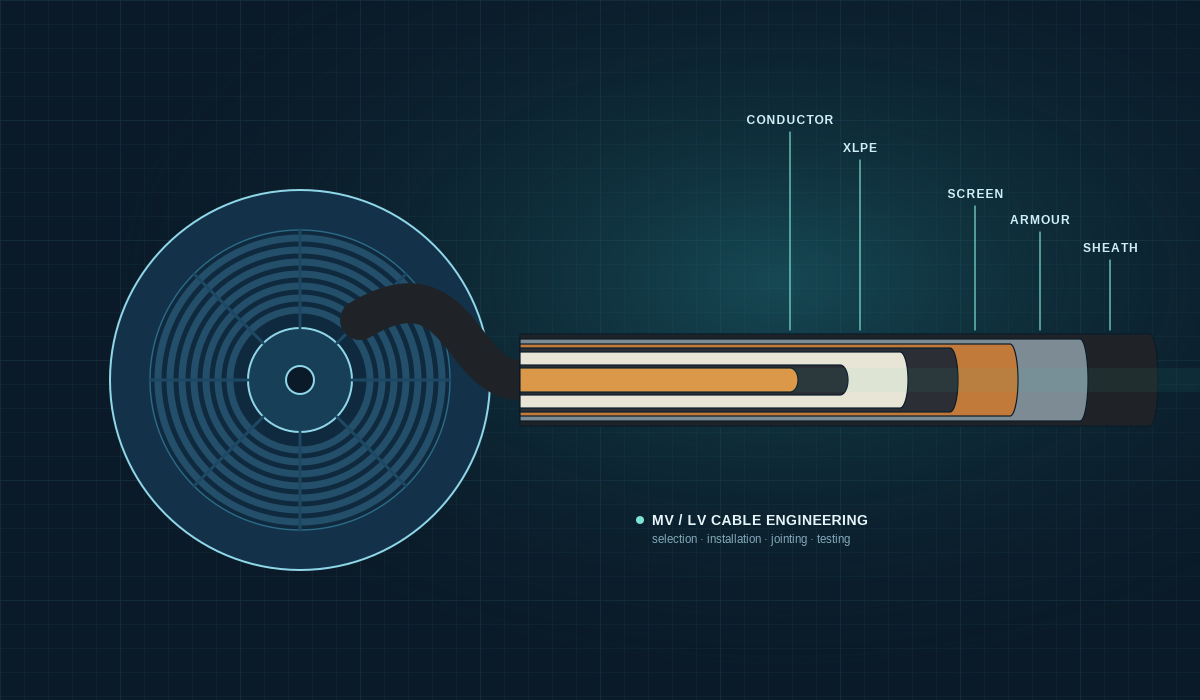
Electrical cable selection is a coordinated engineering task. A conductor cross-section that meets one criterion may fail another, so cable sizing must consider the complete circuit and installation.
01Main selection checks
- Load current: establish design current from the load and operating conditions.
- Current-carrying capacity: check the manufacturer's or applicable standard's ampacity data for installation method and reference conditions.
- Correction factors: account for ambient temperature, grouping, soil thermal resistivity, burial depth and other applicable conditions.
- Voltage drop: calculate under relevant operating conditions and compare with project limits.
- Short-circuit withstand: verify conductor and protective device thermal withstand for the fault-clearing time.
- Protection and disconnection: check protective-device rating, settings, fault-loop conditions and coordination.
- Mechanical and environmental conditions: consider route, bending radius, installation stress, UV, moisture, chemicals and fire performance where specified.
02Documents to keep aligned
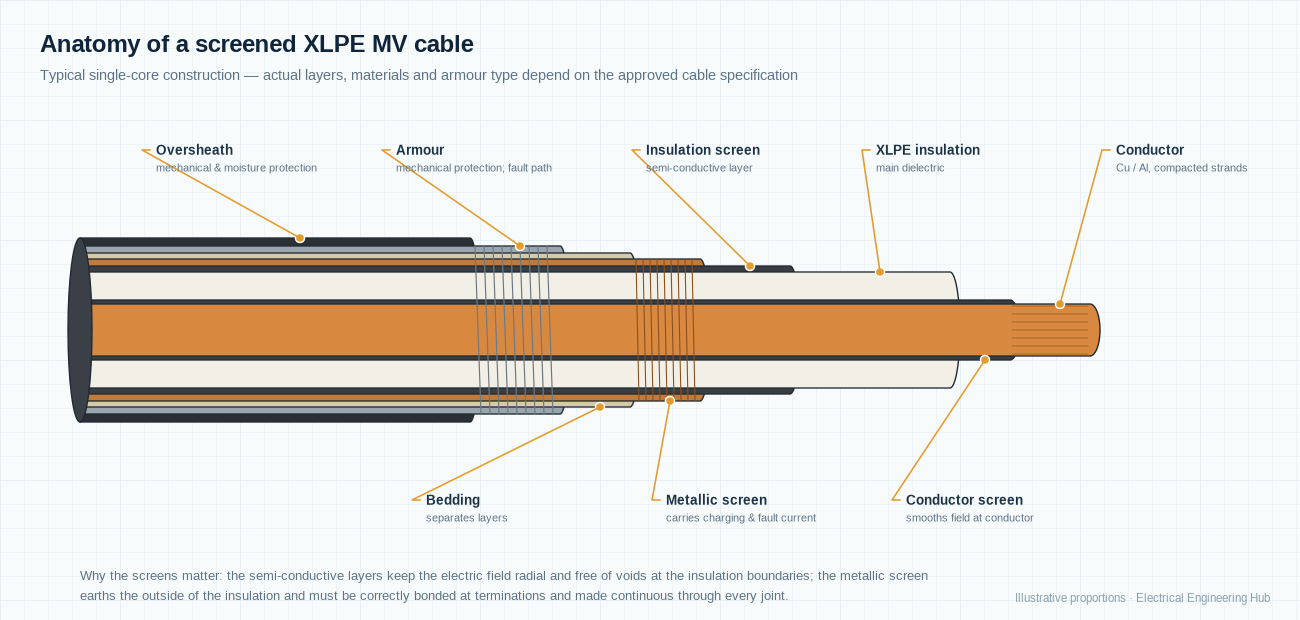
Coordinate the cable schedule, single-line diagram, load schedule, route drawings, specifications, datasheets and protection study. Confirm that conductor material, insulation, voltage grade, number of cores, armour/screen and sheath match the approved design.
Safety and design note: This guide is a review framework, not a cable-sizing calculation or approval. Apply the governing standards, local regulations, project specifications and engineering design checks.