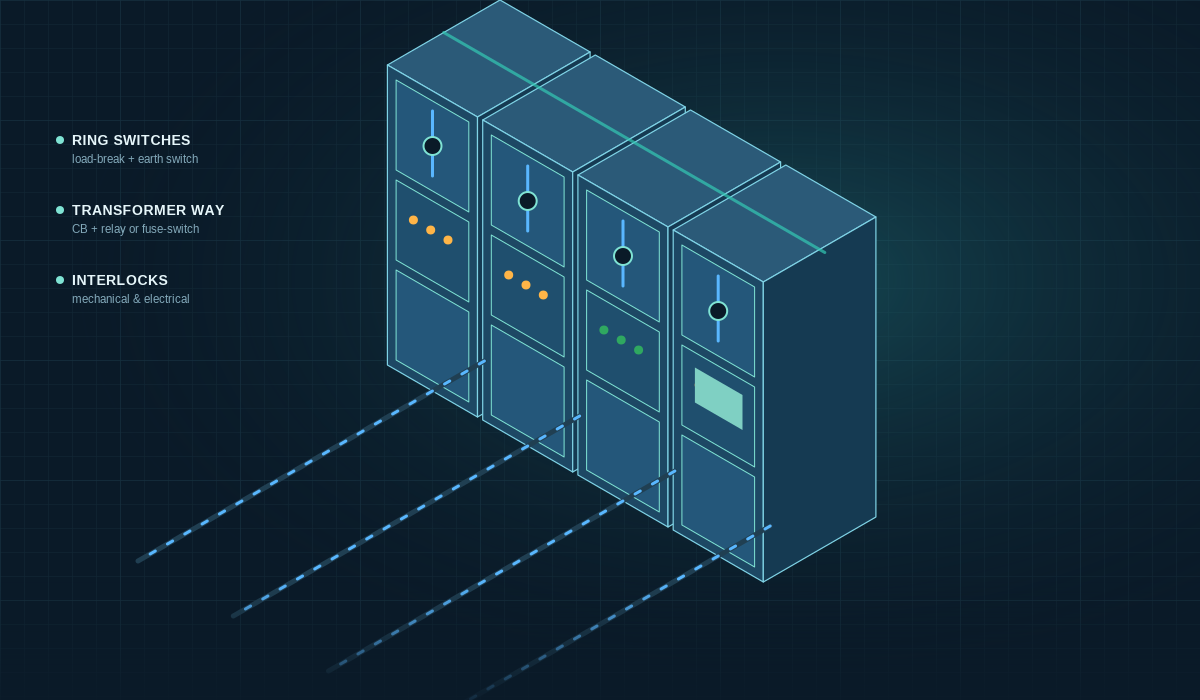
A ring main unit (RMU) is a compact medium-voltage switchgear assembly commonly used in distribution networks. Its configuration may include ring switches, a transformer feeder switch-fuse combination or circuit breaker, busbars, earthing switches, voltage indication and protection/control accessories. The exact arrangement varies by manufacturer and project design.
011. Identify the RMU configuration
- Manufacturer, model, serial number and rated voltage.
- Rated normal current and short-time withstand ratings.
- Number and type of functional ways.
- Switch-disconnector, circuit breaker or switch-fuse arrangement.
- Insulation medium and enclosure type.
- Protection relay, CTs, voltage sensors and auxiliary supply arrangements.
- Earthing switch and mechanical/electrical interlock features.
022. Understand the main functional elements
Ring ways: connect the RMU into the distribution ring and are used to sectionalize the network in accordance with the approved operating philosophy.
Transformer feeder: supplies a distribution transformer through the specified switching and protection arrangement. The protection device may be a switch-fuse combination or circuit breaker, depending on design.
Earthing switch: provides an earthing function as designed and interlocked. Its position and permitted operation must be confirmed using the manufacturer's instructions and approved switching procedure.
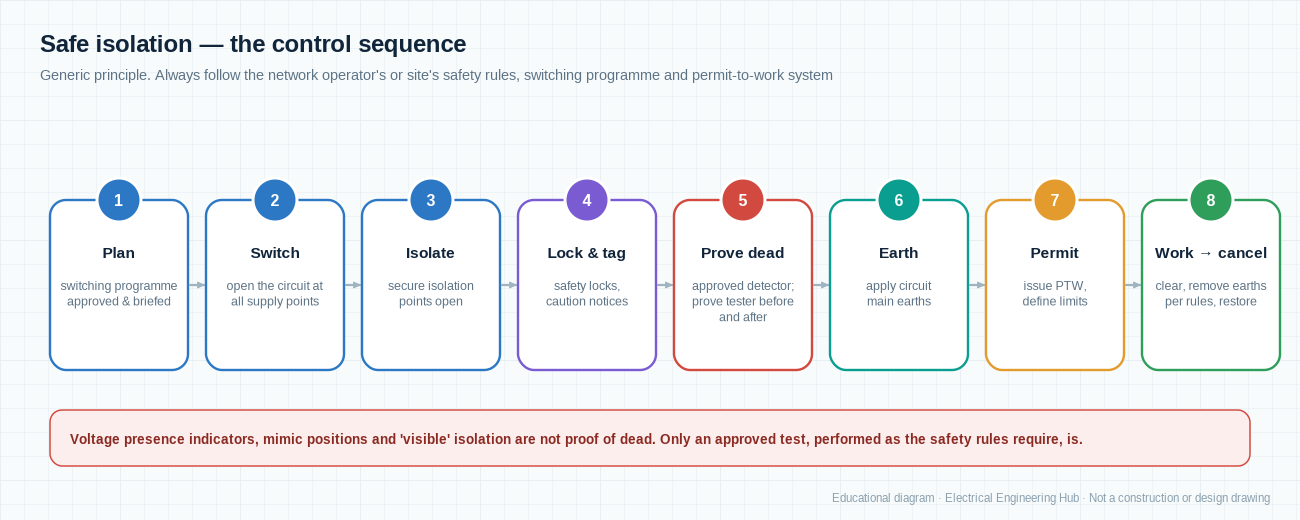
Voltage indication: provides a means of indicating voltage presence or absence according to the device design. It must not be treated as a substitute for the approved proving-dead procedure unless the applicable procedure explicitly permits it.
033. Pre-operation document checks
- Approved single-line diagram and latest switching schedule.
- RMU operation manual and interlock logic.
- Network operating procedure and permit-to-work requirements.
- Approved protection settings and coordination study where applicable.
- Gas/pressure or insulation-medium monitoring requirements, where applicable.
- Emergency contacts, arc-flash information and site safety controls.
044. Routine visual inspection topics
- Enclosure condition, corrosion, water ingress and ventilation/space-heater condition where fitted.
- Door, locks, labels, mimic diagram and warning signs.
- Operating mechanism indicators and position flags.
- Pressure/density indicators or alarms where applicable to the insulation technology.
- Protection relay display, alarm history and auxiliary supply health.
- Cable termination compartments, visible signs of overheating, contamination or tracking—only where inspection can be performed safely.
- Earthing connections and bonding condition.
055. Maintenance planning
Maintenance intervals and intrusive work must follow the manufacturer, asset owner and utility requirements. Depending on design and condition, the plan may include functional checks, mechanism inspection, contact resistance measurement, insulation tests, relay secondary injection, trip circuit checks, battery/auxiliary supply checks and review of pressure or gas condition. Some sealed-for-life or maintenance-free designs have specific restrictions; do not open sealed compartments or handle insulating gas unless trained, authorized and equipped under applicable environmental and safety rules.
066. Records to retain
- Asset identification, location, feeder designation and nameplate data.
- Operating and switching history, including fault operations.
- Inspection checklists, defect photographs and corrective actions.
- Relay setting files, test reports and trip-circuit records.
- Pressure/density or insulation-medium records where applicable.
- Manufacturer service reports, spare-parts details and maintenance history.
07Common field errors
- Assuming all RMUs have the same switch and earthing arrangement.
- Relying on mimic indication alone without the required independent safety verification.
- Operating without confirming feeder identity and approved switching sequence.
- Ignoring alarms, pressure/density indications or abnormal mechanical resistance.
- Applying test methods that are not approved for the specific insulation technology.
Related reading: Explore all electrical engineering guides, including voltage drop, transformer fundamentals and material submittal review.