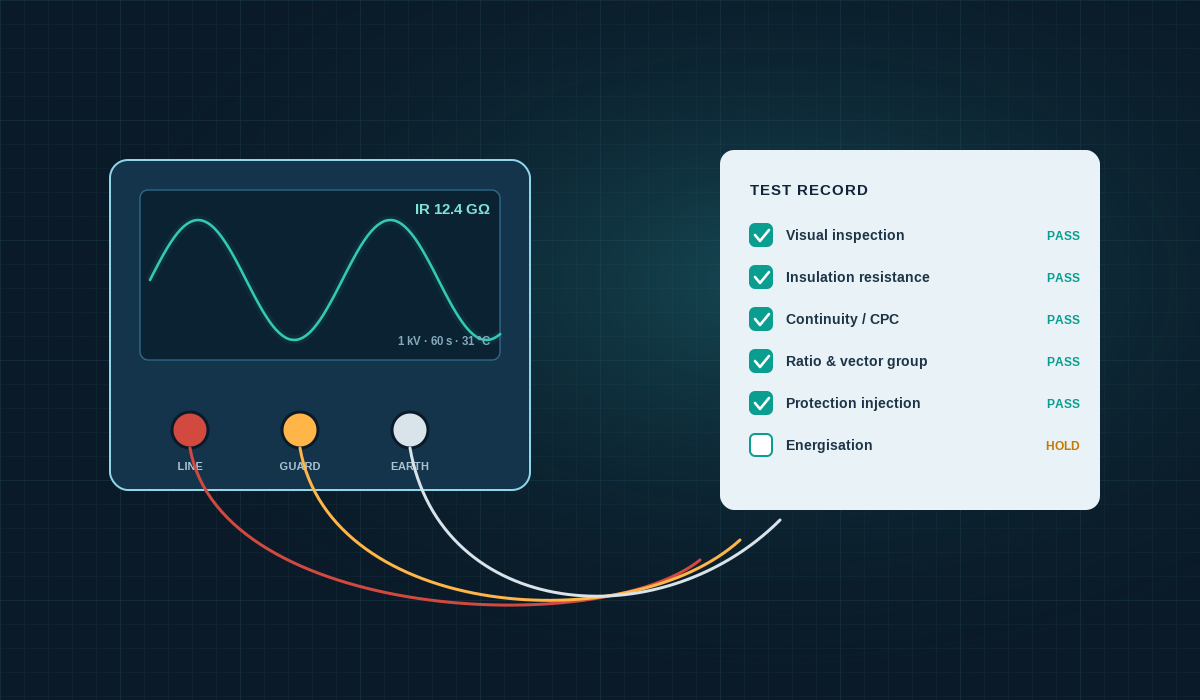
Transformer commissioning confirms that the supplied unit has been installed correctly, its condition is acceptable and the required protection, control and auxiliary systems are ready for service. The approved inspection and test plan (ITP), manufacturer instructions, contract requirements and applicable standards govern the actual scope and acceptance criteria.
011. Review documents before site testing
- Approved datasheet, drawings, nameplate and factory routine/type/special test reports as applicable.
- Manufacturer installation, operation and maintenance manuals.
- Approved ITP, method statement, risk assessment and commissioning procedure.
- Protection scheme drawings, CT data, trip matrix, interlocks and control schematics.
- Oil test certificates and handling records for oil-filled units, where applicable.
- Calibration certificates for test instruments and approved acceptance criteria.
022. Visual and mechanical inspection
- Verify manufacturer, serial number, rating, voltage ratio, vector group, impedance and tap range against approved documents.
- Inspect tank, radiators, bushings, conservator, breather, gaskets, valves and paintwork for damage or leakage.
- Check oil level, oil sampling points and accessories where applicable.
- Verify earthing connections, neutral earthing arrangement and equipment bonding.
- Check cable/busbar connections, clearances, phase identification and torque records against manufacturer instructions.
- Verify fans, pumps, temperature indicators, pressure relief devices and alarm contacts as fitted.
033. Typical electrical tests
The exact tests depend on transformer type, rating, design, project specification and manufacturer recommendations. Common examples include:
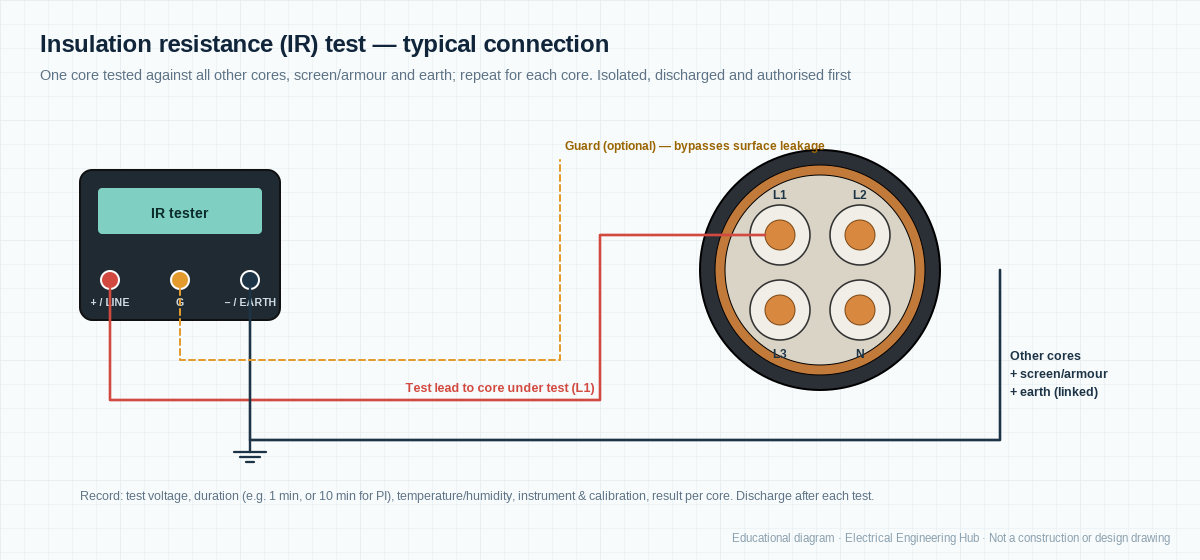
- Insulation resistance: assess insulation condition between windings and earth and between windings, using the specified test voltage and procedure. Record temperature and test duration.
- Winding resistance: measure each phase/tap as required, allow readings to stabilize and apply temperature correction where the procedure requires it.
- Turns ratio: verify ratio on specified phases and tap positions against the nameplate and approved data.
- Vector group/polarity: confirm winding connection and phase relationship using the approved test method.
- Magnetic balance or excitation current: perform only where specified and interpret results using manufacturer guidance and comparable phase readings.
- Oil tests: for oil-filled transformers, carry out specified tests such as dielectric breakdown, moisture or dissolved gas analysis when required by the project or maintenance strategy.
- Functional tests: verify alarms, trips, temperature devices, cooling controls, tap changer controls and interlocks.
044. Protection and control checks
Verify CT ratios, polarity, secondary earthing and wiring against approved drawings. Check the protection relay settings and coordination approval before injection or trip testing. Test applicable differential, restricted earth fault, overcurrent, earth-fault, temperature, Buchholz, pressure-relief and other functions only as fitted and specified. Confirm trip paths, lockout logic, breaker operation, alarms, annunciation and SCADA indications.
055. Pre-energization readiness
- Close all inspection and test records and resolve critical punch items.
- Confirm mechanical completion, clearances, access control and fire/safety provisions.
- Verify neutral earthing, surge protection and all required connections.
- Confirm tap position, cooling mode, protection settings and interlocks.
- Confirm the approved switching program, permits, isolation boundaries and communication protocol.
- Obtain the required client, consultant, utility and operations approvals before energization.
066. Records and handover
Compile signed test sheets, raw readings, instrument details, calibration evidence, oil test results, relay reports, approved settings, punch-list closure, energization authorization and as-built documents. Record ambient and winding/oil temperatures where relevant so results can be interpreted correctly and compared during future maintenance.
07Important cautions
- Do not invent pass/fail limits; use the approved specification, standard and manufacturer's criteria.
- Do not compare readings without considering temperature, test voltage, instrument and test method.
- Do not megger connected electronic devices, surge arresters or accessories unless the manufacturer-approved procedure permits it.
- Do not energize with unresolved protection, earthing, interlock or safety deficiencies.
Related reading: Explore all electrical engineering guides, including voltage drop, transformer fundamentals and material submittal review.